
Last updated October 16, 2026
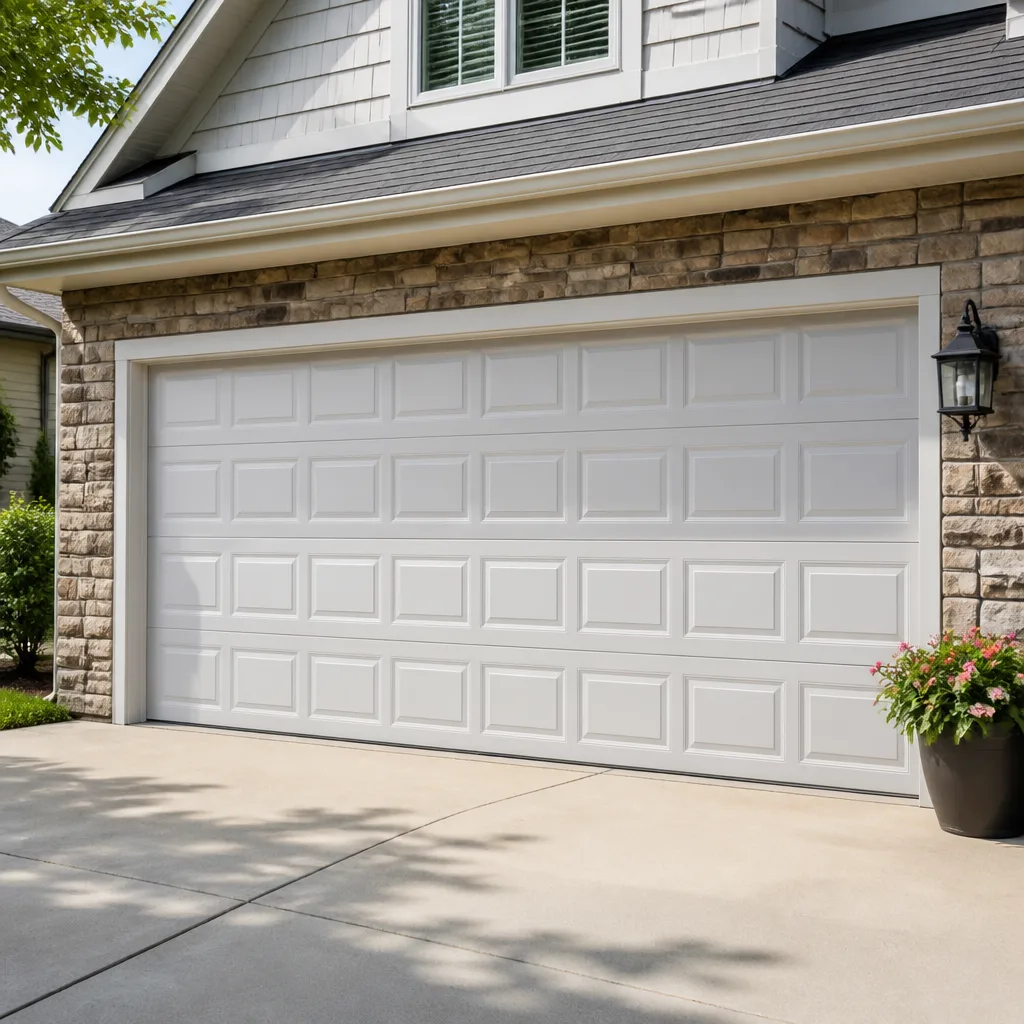 Raised-panel steel
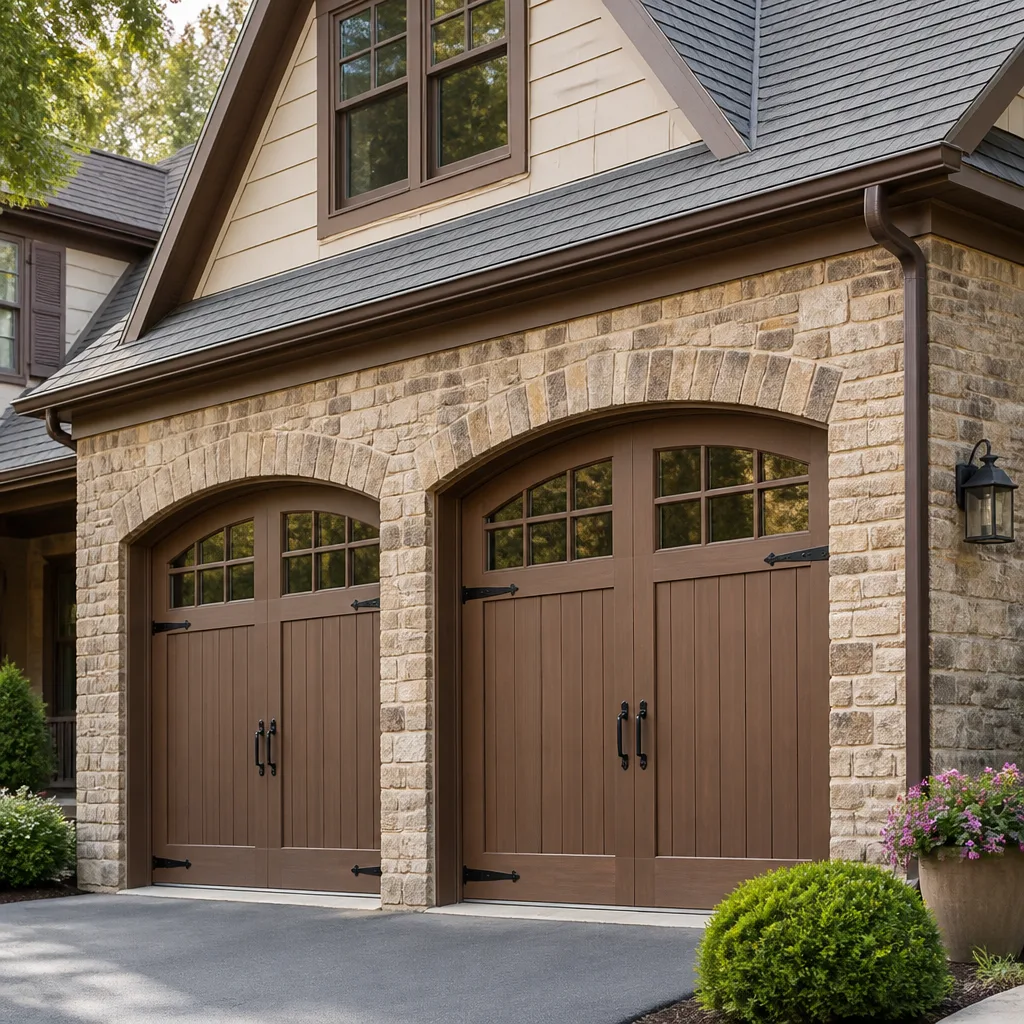 Carriage house
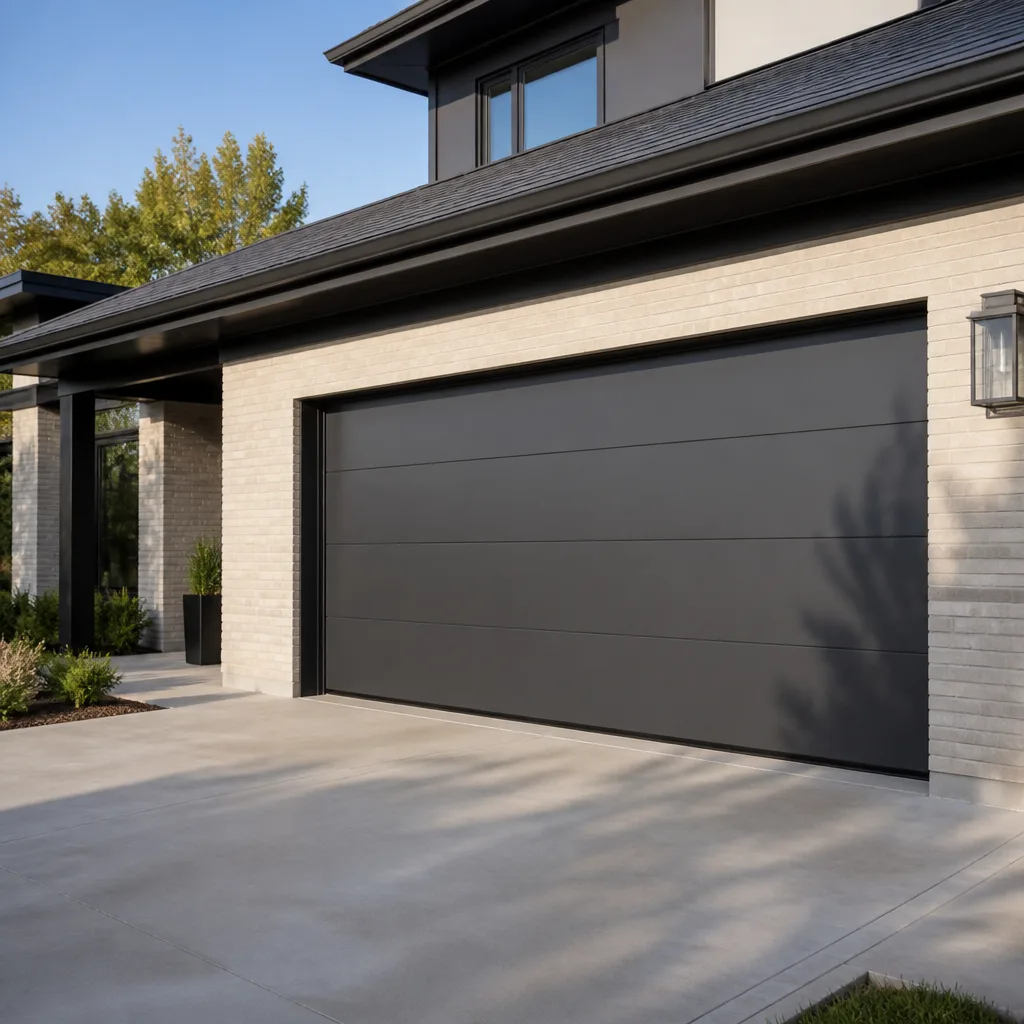 Modern flush
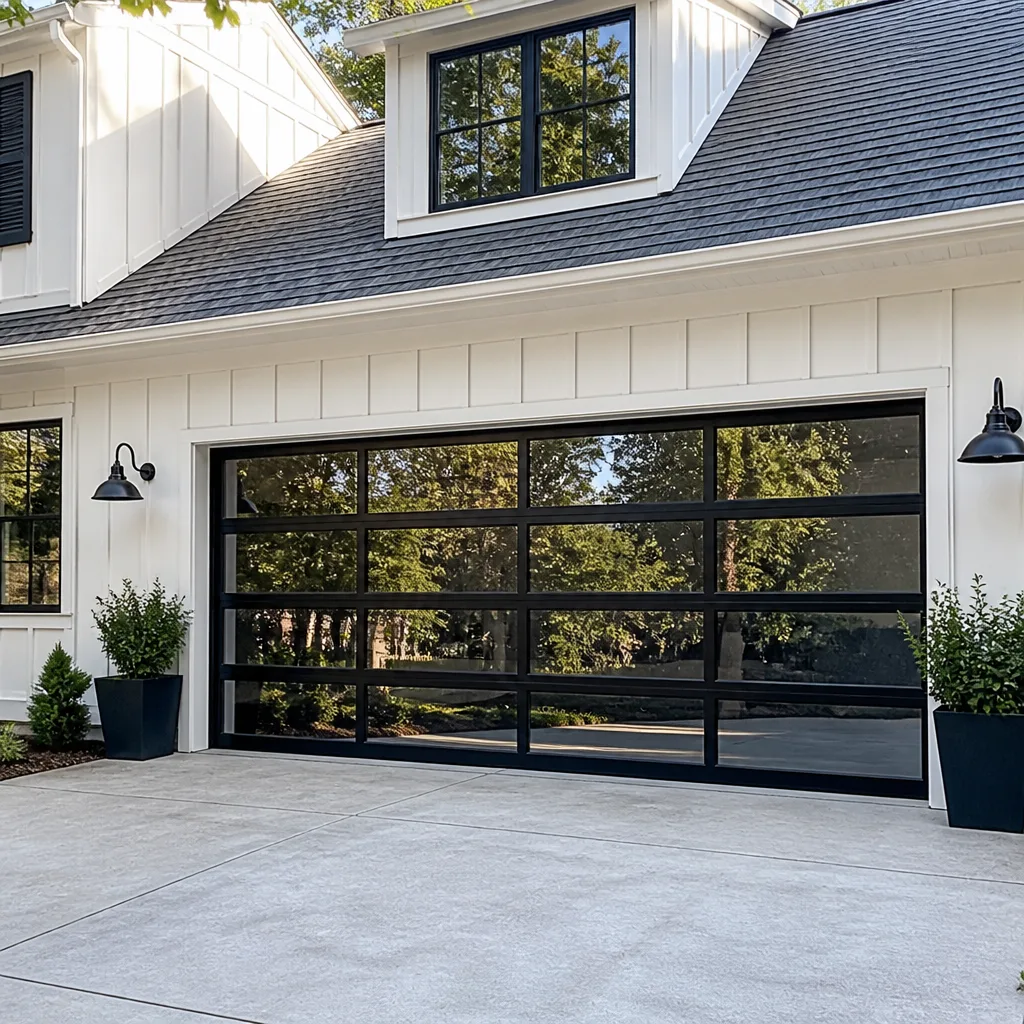 Full-view glass
 LiftMaster openers
 Chamberlain openers
Full 25-point door and opener safety check with every visit - springs, cables, rollers, tracks, and your LiftMaster or Chamberlain opener included
You get a price before we start. It does not change when the truck arrives.
Get your free estimateDIY vs Professional Garage Door: The Tampa Homeowner’s Decision Guide
A standard torsion spring on a double-wide garage door stores about 110 pounds of torque per square inch when fully wound. When that spring lets go, it releases that energy in under half a second. It’s not a metaphor for danger, it’s the actual load calculation. This guide draws an honest line between the garage door tasks you can safely handle yourself and the ones that can put you in a Tampa emergency room, because most DIY advice online either exaggerates every risk to sell you a service call or waves it all off for clicks. Neither serves you.
Quick Answer
Most garage door maintenance in Tampa is DIY-friendly: cleaning tracks, tightening bolts, replacing weatherstripping, and reprogramming remotes are low-risk tasks that don’t require special tools. However, torsion spring replacement and cable work under tension are categorically different, storing stored mechanical energy comparable to a low-speed car crash, and should always be handled by a licensed technician. The decision isn’t about your skill level; it’s about which tasks carry genuine injury risk and which ones don’t.
Styles & brands we work with
Table of Contents
- The Physics Problem: Why Torsion Springs Are Different
- Safe DIY Tasks: What You Can Actually Do Yourself
- The Tool Line: When Your Toolbox Says Call Someone
- Florida Insurance and Liability: What DIY Really Costs
- DIY vs Pro: Real Cost Comparison for Tampa
- The Decision Matrix: Symptom by Symptom
- Common Mistakes to Avoid
- When to Call a Professional
The Physics Problem: Why Torsion Springs Are Different
Here’s the thing most guides won’t tell you clearly: a torsion spring, the horizontal coil mounted above your door opening, isn’t just a stretched rubber band. It’s a wound piece of tempered steel that lifts a 150 to 300 pound door every single time you press the button. To lift that door, the spring gets wound to roughly 7 to 8 full turns, storing somewhere between 50 and 150 foot-pounds of torque depending on your door’s weight and spring size.
When a worn spring snaps while the door is opening, the failure mode is violent. The broken ends whip outward at speeds fast enough to break bone, and if you’re standing on a ladder with a winding bar in the spring cone at that moment, the bar becomes a projectile. We’ve seen what happens to Tampa garages when a homeowner tries to save $200 by following a YouTube tutorial: shattered drywall, dented cars, and in the worst cases, a trip to Tampa General with a fractured wrist or orbital bone.
This isn’t a “leave it to the experts” scare tactic. It’s the same reason you don’t remove your own car’s airbag. The risk isn’t from lack of skill; it’s from the stored energy itself. A skilled technician can replace a torsion spring safely because they use two properly sized winding bars, work from a stable position, and understand exactly how many quarter-turns your specific spring requires based on the door’s weight and height. You don’t get a second attempt if you lose grip on that bar.
In our 20-plus years serving Tampa, from Westchase to Seminole Heights, we’ve never once met a homeowner who regretted hiring a professional for spring work after seeing the aftermath of a failed DIY attempt. We have, however, met several who regret the opposite.
Safe DIY Tasks: What You Can Actually Do Yourself
Now for the honest counterpoint: there are plenty of garage door tasks that are genuinely safe, genuinely simple, and often overpriced when hired out. For a full list of what Tampa homeowners can safely tackle, see our maintenance checklist. Here’s where a Tampa homeowner with a cordless drill and an hour on a Saturday can absolutely save money without risking injury.
1. Weatherstripping Replacement
The rubber seal along the bottom of your garage door degrades fast in Florida humidity and UV exposure. You’ll notice it cracking, flattening, or pulling away from the aluminum retainer. Replacement is a 30-minute job: pull out the old strip, slide in the new one, done. Materials cost $15 to $40 at any Tampa hardware store. No ladder, no tension, no risk. This is the single most DIY-friendly garage door task there is.
2. Roller Swaps (Non-Cable Rollers Only)
Garage door rollers, the small wheels that guide the door along its vertical and horizontal tracks, wear out every 5 to 7 years in Tampa’s heat and humidity. Swapping them is only safe when the roller is NOT attached to the lift cable. Bottom rollers and the rollers near the spring assembly are cable-mounted; leave those alone. But the middle rollers on the vertical track can be removed with a simple bend-and-pop motion once the door is fully open. A set of 10 nylon rollers runs $30 to $60. Just don’t touch anything near the cables.
3. Track Cleaning and Lubrication
Tampa’s salt air, sand, and humidity gum up tracks faster than almost anywhere in the country. Cleaning tracks with a rag and applying white lithium grease to hinges and rollers is genuinely DIY-appropriate. You’re not adjusting anything, not removing anything under load, just reducing friction. Do this twice a year and you’ll extend the life of every moving part. The only warning: never use WD-40 on rollers or hinges. It’s a solvent that strips existing lubrication and leaves you with metal-on-metal grinding.
4. Remote and Keypad Reprogramming
If your remote stops working after a power surge, which Tampa gets plenty of during summer storm season, you can usually reprogram it yourself in five minutes. Every major brand, LiftMaster, Chamberlain, Genie, includes a simple “learn” button on the opener unit. Hold it down, press the remote button, done. No tools, no risk, no $100 service call. The only time this gets complicated is with older openers that use dip switches, but even that is just matching switch positions.
If you’re comfortable with these four tasks, you’re already doing the work that makes up roughly 30 to 40 percent of the “routine maintenance” calls we get for Garage Door Repair in Tampa. The remaining 60 to 70 percent is where the risk line matters.
The Tool Line: When Your Toolbox Says Call Someone
There’s a surprisingly reliable way to decide if a repair is DIY-appropriate: look at the tools the job requires. If you can do it with tools you already own or can buy for under $50 at a big-box store, it’s probably safe. If the job requires a specialized tool with a safety function, that’s the line. Cross it and you’re entering professional territory.
- Winding bars (two of them, 18 to 24 inches long, solid steel, sized to your spring cone) are the universal sign of a torsion spring job. If the tutorial says you need these, stop. Using screwdrivers or rebar as substitutes is how people get hurt. The spring cone’s four holes are sized specifically for certain bar diameters; using the wrong diameter means the bar slips out under load.
- Cable drums and tension gauges are the tools for cable replacement and re-tensioning. Lifting cables on a standard door carry the full weight of the door when the spring isn’t doing its job. Replacing them correctly requires knowing how to set the drum so both sides lift evenly. Uneven tension means the door jams, jumps, or binds mid-cycle.
- Spring gauges and scale tools are used to measure door weight before sizing replacement springs. A door that’s 20 pounds heavier than you think it is will be dangerously over-sprung or under-sprung after your repair. That’s how doors crash down or refuse to stay open.
The takeaway isn’t “if you have to buy tools, don’t DIY.” It’s that the tools themselves tell you the nature of the job. A socket set and a utility knife are for maintenance. Winding bars and cable drums are for spring and cable work under stored energy. The tools exist to protect the user because the task is dangerous without them.
Florida Insurance and Liability: What DIY Really Costs
Here’s where Tampa-specific realities make DIY even less appealing for the dangerous tasks, and why understanding Florida permits and codes matters before you start. Florida property insurance is already the most expensive in the nation, with average premiums running two to three times the national average. If you’re a homeowner in Hillsborough County, your insurer is already looking for reasons to deny or delay claims. A DIY garage door repair that goes wrong, especially one involving a spring that damages your car, your drywall, or injures someone, can give them one.
Standard Florida homeowners policies cover “sudden and accidental” damage. A garage door that falls because a spring you installed was improperly sized is not sudden and accidental from the insurer’s perspective. It’s a maintenance failure. Worse, if the falling door injures a family member or a neighbor, your personal liability coverage may be contested on the grounds that you performed unpermitted work outside your expertise.
Then there’s the resale angle. Florida law requires sellers to disclose known defects and unpermitted work, but even beyond disclosure, a home inspector in Tampa is going to notice if the garage door doesn’t balance properly, if the springs are the wrong size, or if the safety reverse mechanism doesn’t work. A botched DIY spring job can cost you $1,500 to $2,500 in concessions at closing, which is several times more than hiring a professional in the first place.
None of this applies to weatherstripping or roller swaps. Inspectors don’t flag new rubber seals. But the structural safety of the door, springs, cables, and opener, is exactly what they test.
DIY vs Pro: Real Cost Comparison for Tampa
Let’s put numbers on it. These are the realistic ranges we see in Tampa for common garage door jobs, comparing what you’d spend on parts and tools versus what a professional charges for the same work.
| Job | DIY Cost (Parts + Tools) | Pro Cost in Tampa | Risk Level | Recommendation |
|---|---|---|---|---|
| Weatherstripping replacement | $15 – $40 | $90 – $150 | Low | DIY |
| Roller replacement (non-cable) | $30 – $60 | $120 – $200 | Low | DIY |
| Track cleaning and lubrication | $10 – $25 | $80 – $120 | Low | DIY |
| Remote reprogramming | $0 | $60 – $100 | None | DIY |
| Torsion spring replacement (single) | $60 – $120 in parts, plus $40+ in winding bars you’ll use once | $180 – $340 | High: stored energy, projectile risk | Call a pro |
| Cable replacement | $25 – $50 in parts, but needs tension gauges and drum knowledge | $150 – $280 | High: door weight on the cable | Call a pro |
| Opener replacement | $180 – $350 for the unit, but requires mounting, alignment, and safety-reverse calibration | $350 – $650 installed | Medium: electrical, door alignment | Usually call a pro |
The pattern is clear. The DIY savings on low-risk maintenance tasks are real: you can save $70 to $100 per weatherstripping or roller job. But the “savings” on a spring replacement, about $100 to $150 after you buy tools, is the cost of a single urgent care visit co-pay. And that’s if nothing worse happens.
If you decide the pro route makes sense, every job we do comes with a written price before any work starts. That’s the standard we’ve held since 2002, and it’s why we’re comfortable telling you to DIY the small stuff: we’re not here to sell you a weatherstripping call you could handle yourself.
The Decision Matrix: Symptom by Symptom
Here’s the fast answer for Tampa homeowners who don’t want to read a 3,000-word guide. Match your symptom, get your answer.
- Door is noisy (grinding, squealing, rattling): DIY. Clean the tracks, lubricate hinges and rollers with white lithium grease, tighten loose bolts. If the noise persists after two weeks, call a pro.
- Door opens unevenly or jams halfway: Caution. This usually means cable or track misalignment, which is borderline DIY. You can inspect for obvious debris or bent tracks, but if the issue persists, call a pro. A jamming door can fall.
- Door reverses immediately after touching the floor: DIY. Check the close-force setting and clean the safety sensor lenses. Tampa humidity fogs sensors constantly; a dry microfiber cloth usually fixes it.
- Spring visibly broken (you can see a gap in the coil): Call a pro. This is the one-answer category. A broken torsion spring cannot be safely repaired by a homeowner. The door won’t open properly, and the repair involves releasing stored energy. Garage Door Spring Repair in Tampa is a job where DIY isn’t just inadvisable, it’s genuinely dangerous.
- Cable is frayed or snapped: Call a pro. When a cable fails, the door is held up by either the other cable or nothing at all. Replacing cables requires re-tensioning the entire lift system. Garage Door Cable Repair in Tampa is the one job where we consistently see DIY attempts end in dropped doors.
- Remote or keypad won’t work: DIY. Replace batteries first, then reprogram using the learn button. If the opener still doesn’t respond, the logic board may be fried, in which case call a pro.
- Door is off its tracks entirely: Call a pro. A door that’s jumped the track can weigh several hundred pounds and is resting on the track, the floor, or whatever is under it. Lifting it back without proper equipment is a recipe for crush injuries.
- Opener runs but door doesn’t move: Caution. This usually means the opener gear is stripped or the emergency release is disengaged. You can check the release cord first, that’s DIY. If it’s engaged and the opener still runs, call a pro; the gear train is inside the unit and requires disassembly.
Common Mistakes to Avoid
- Using screwdrivers as winding bars. This is the single most common DIY injury we hear about in Tampa. The screwdriver shaft is the wrong diameter, slips out of the cone hole under torque, and becomes a projectile. Two $15 winding bars are cheaper than the ER visit that follows.
- Lubricating the spring with WD-40. WD-40 strips the grease from torsion springs and accelerates corrosion, especially in Tampa’s salt-air environment. Use a silicone-based spray on springs if you must, but never a penetrating oil.
- Adjusting spring tension to “make the door open faster.” Springs are sized to your door’s exact weight. Over-tightening by even a quarter-turn changes the door’s balance and puts stress on cables, drums, and the opener motor. Doors that fly open are doors that crash down.
- Disconnecting the emergency release while the door is fully up. On a door with broken springs, pulling the red release cord while the door is raised means the full weight of the door comes down with nothing to stop it. If you need to release the door, do it with the door closed or fully supported.
- Skipping the safety reverse test after any repair. Florida building code requires that your door reverse when it encounters an obstruction. If you’ve adjusted anything on the door or opener, test this by placing a 2×4 flat under the door and closing it. If it doesn’t reverse, your repair isn’t done.
- Buying springs online without matching the door weight. A spring from Amazon that “fits most doors” is a guess. The spring must be matched to your door’s exact weight, height, and track radius. A mismatched spring either doesn’t lift the door or lifts it so hard the opener burns out in months.
- Assuming Tampa humidity doesn’t affect spring life. Florida coastal air corrodes garage door springs faster than inland climates. We replace springs in Tampa that rust through in 4 to 5 years compared to 7 to 10 in drier states. A rusty spring is a ticking clock regardless of what the mileage calculator says.
When to Call a Professional
If you’re seeing a broken torsion spring, a frayed or snapped cable, a door off its tracks, or an opener that runs but won’t move the door, you’re in professional territory. These are the jobs where the risk isn’t wasted money, it’s a falling door or a projectile spring. We see Tampa homeowners every year who wish they’d made the call before the injury, not after.
Marlow Garage Door Repair Tampa offers free estimates in Tampa, and every job comes with a written price before any work begins, plus our 365-Day Done Right Promise: if the repair isn’t right, we make it right, for a full year, no fine print. Call (850) 761-0207 and a real person answers, 24 hours a day, 7 days a week.
See the difference
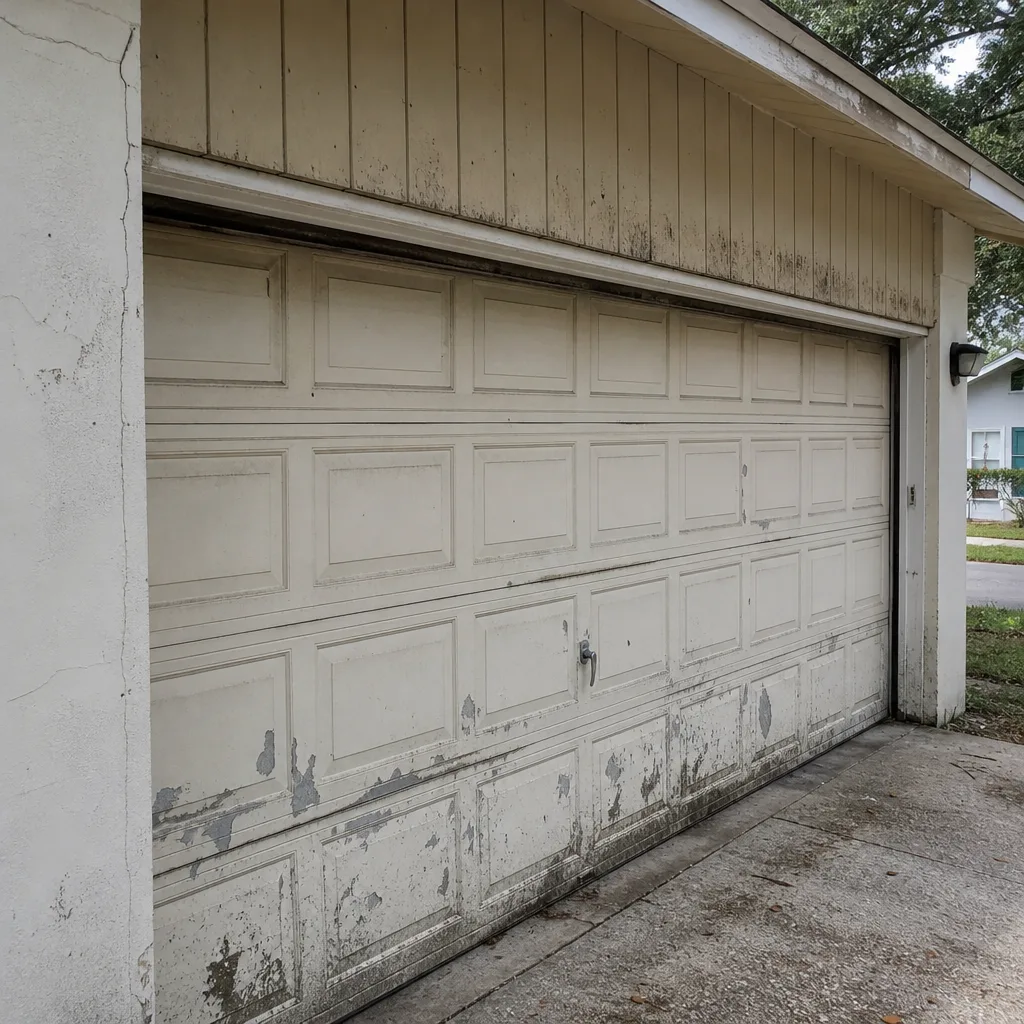 Before
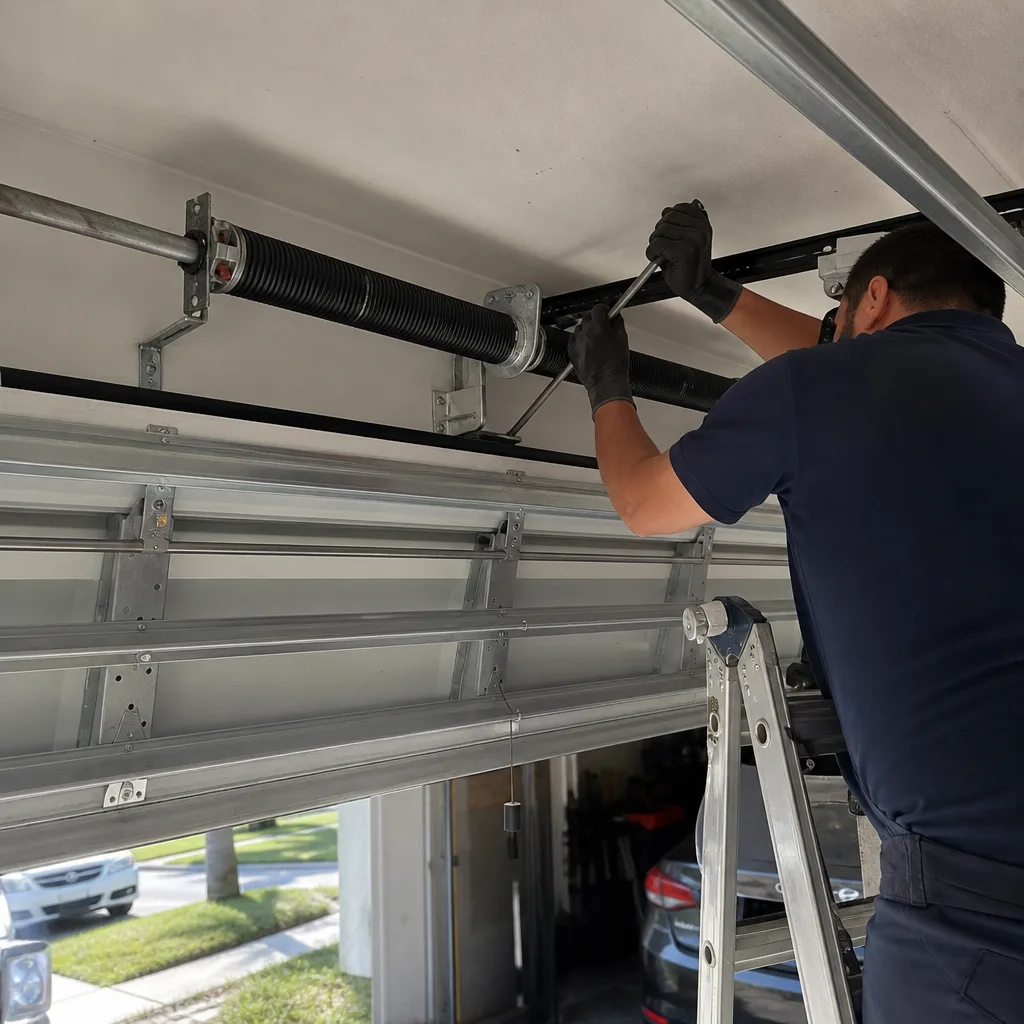 After
After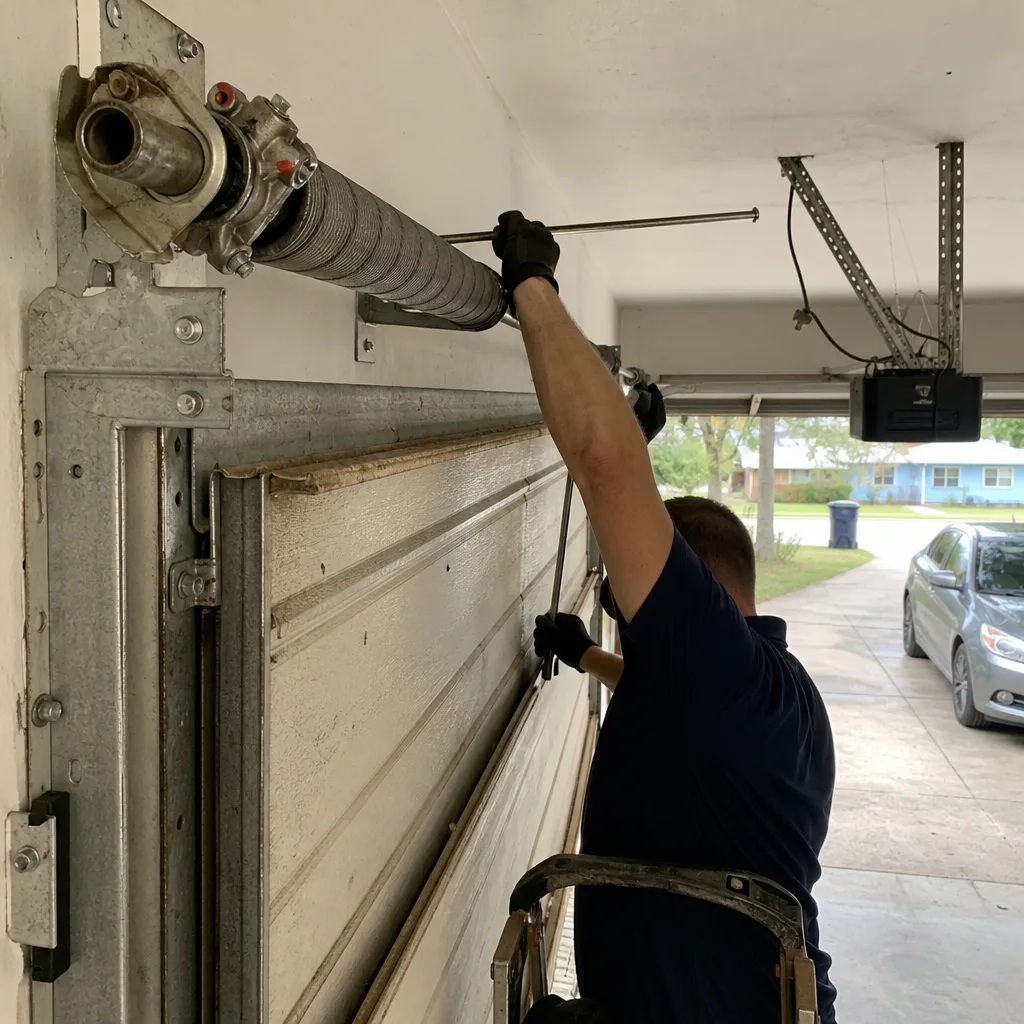 Before
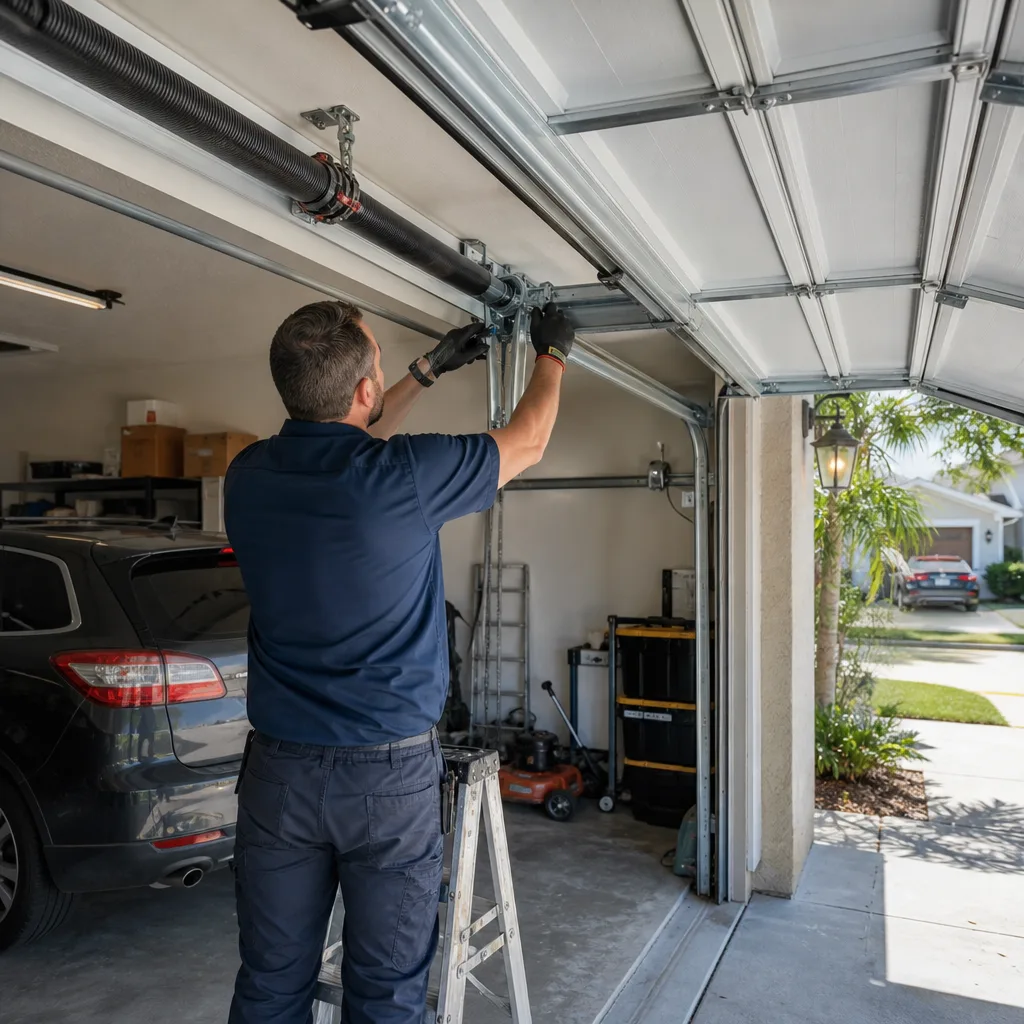 After
After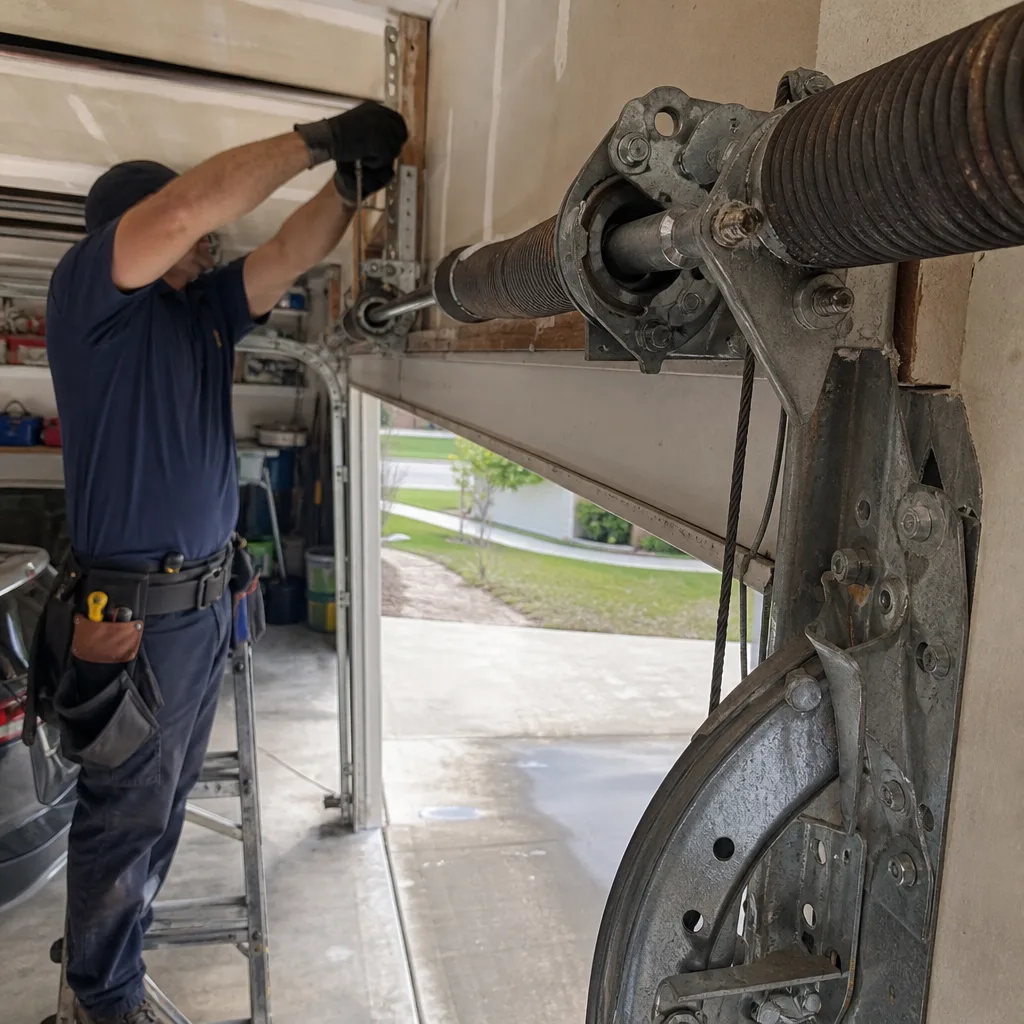 Before
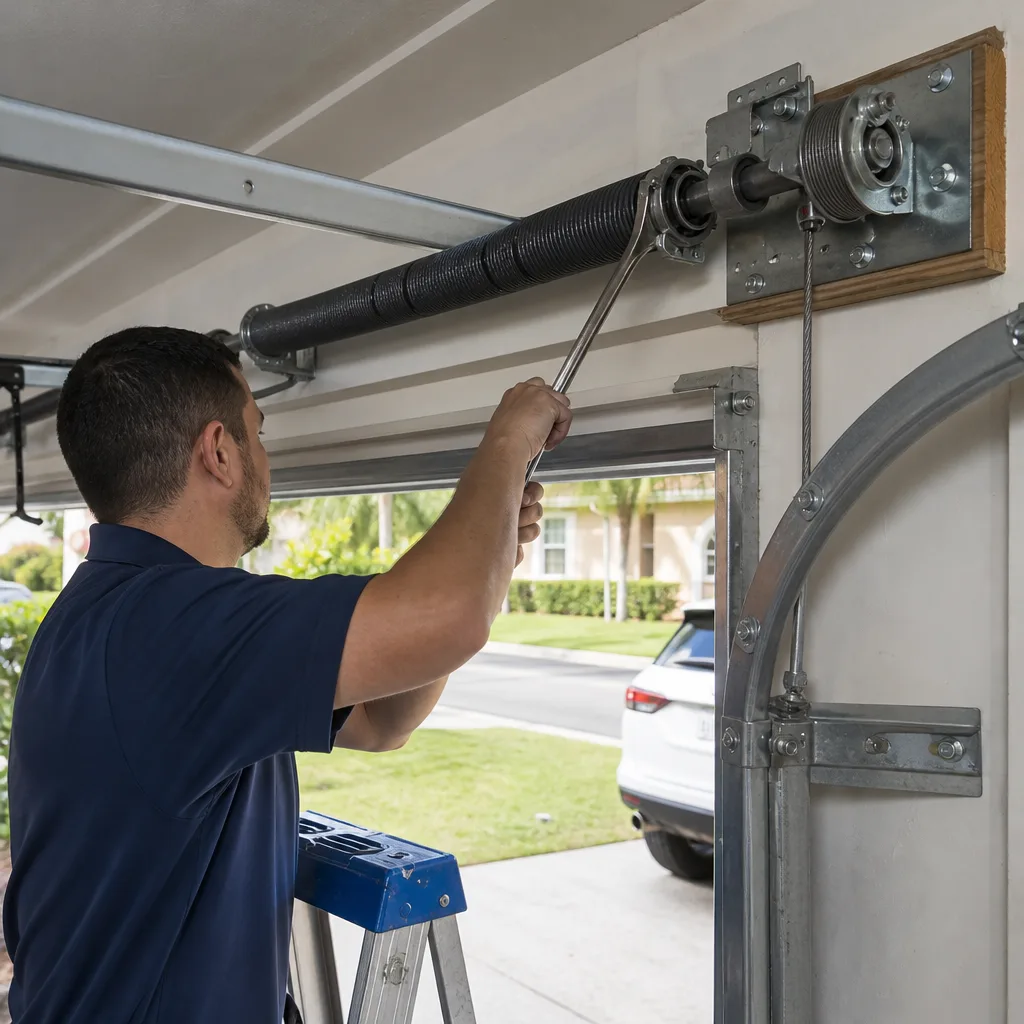 After
AfterFrequently Asked Questions
Torsion springs are dangerous to replace yourself because they store roughly 100 to 150 foot-pounds of torque when fully wound, and a failed release can throw tools or spring fragments at speeds that cause serious injury. Extension springs carry similar energy in stretched form. Professional spring replacement uses matched winding bars, correct turn counts, and controlled release techniques that eliminate the projectile risk. Call (850) 761-0207 for a written quote on spring replacement in Tampa.
Weatherstripping replacement, non-cable roller swaps, track cleaning and lubrication, and remote reprogramming are all safe DIY tasks that don’t require special tools or stored-energy release. These jobs account for about 30 to 40 percent of routine garage door maintenance and can save you $70 to $100 per job. If you’re ever unsure whether a task is safe, the tool requirement is your guide: no special safety tools means DIY is usually fine, winding bars or cable drums means call a professional.
A torsion spring replacement in Tampa typically costs $180 to $340 for a single spring, depending on the spring’s size, cycle rating, and your door’s weight. This includes the part, labor, and proper tensioning. DIY parts run $60 to $120, but the tools and injury risk make the savings a bad trade. Marlow Garage Door Repair Tampa gives you a written price before any work starts, so you know the exact number before we touch a single bolt.
Garage door springs in Tampa’s coastal climate typically last 5 to 7 years, which is 2 to 3 years less than in inland or northern states due to salt air, humidity, and heat-accelerated metal fatigue. If your springs are original to a door installed before 2018 and you’re noticing the door feeling heavy or opening slowly, you’re likely near the end of the spring’s life. Replacing them proactively costs the same as reactive replacement but avoids the spring snapping while your car is inside the garage.
You can, but you shouldn’t. Garage door springs are sized and cycled as a matched pair, and when one breaks, the other is typically close behind. Replacing only the broken spring means you’re paying for labor twice and dealing with a second failure within months. Every professional we know in Tampa recommends replacing both springs at once for a more balanced door and a single service visit.
If a garage door falls during DIY work, the immediate priority is checking for injuries and calling 911 if anyone is trapped or seriously hurt. Do not attempt to lift the door yourself. A fallen door with broken springs weighs 150 to 300 pounds, and lifting it without the proper tools and techniques can cause further injury or additional damage to the tracks and panels. Once the immediate situation is handled, call a professional to assess the damage and replace any broken springs, cables, or track sections before the door is used again.
The Bottom Line
Here’s what it comes down to. If the job involves a torsion spring, a lift cable, or a door off its tracks, hire a professional. The stored energy and falling weight involved are not negotiable risks. If the job is weatherstripping, roller swaps away from cables, track cleaning, or remote reprogramming, grab your tools and go, you’ll save real money. The line between DIY and pro isn’t your confidence or how many YouTube videos you’ve watched; it’s the physics of the part you’re touching. Here in Tampa, where humidity eats springs faster and insurance companies scrutinize claims harder, that line matters even more. We’d rather coach you through a weatherstripping job for free than rush to your house because a winding bar slipped. Check out more guides & resources for Tampa homeowners.
Ready to get a professional’s eyes on the job? Marlow Garage Door Repair Tampa is one call or click away. Get a free estimate at Marlow Garage Door Repair Tampa home or call (850) 761-0207 to talk to a real person right now.
Written by Jaylen Ross, Owner at Marlow Garage Door Repair Tampa, serving Tampa since 2002.