
Last updated October 16, 2026
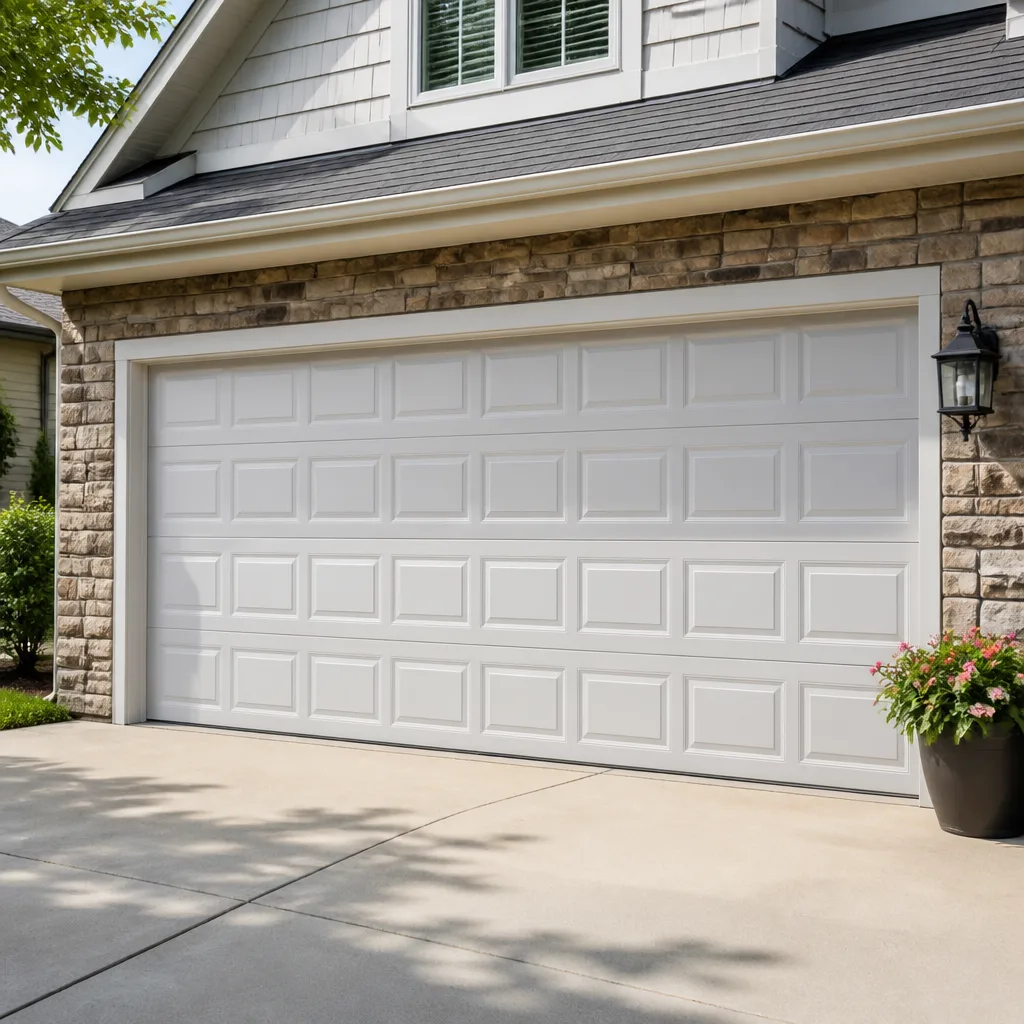 Raised-panel steel
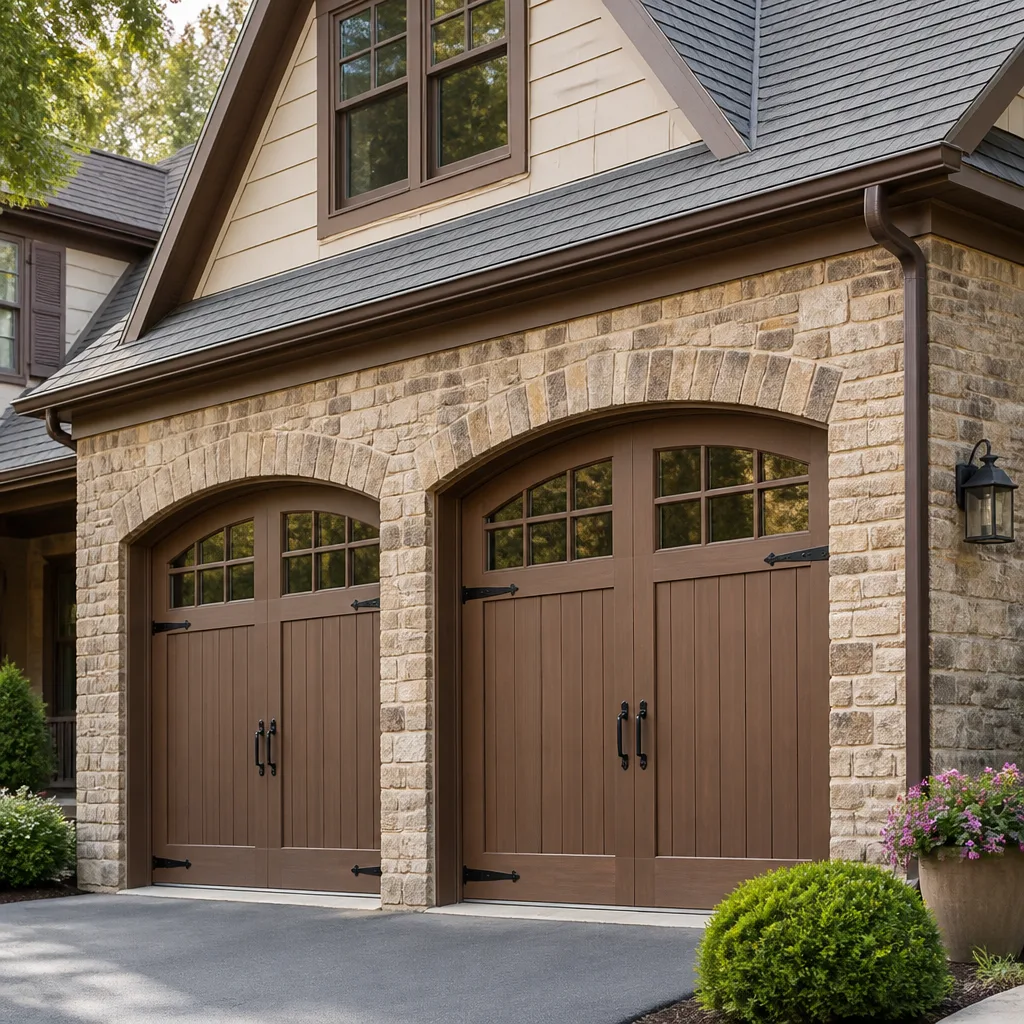 Carriage house
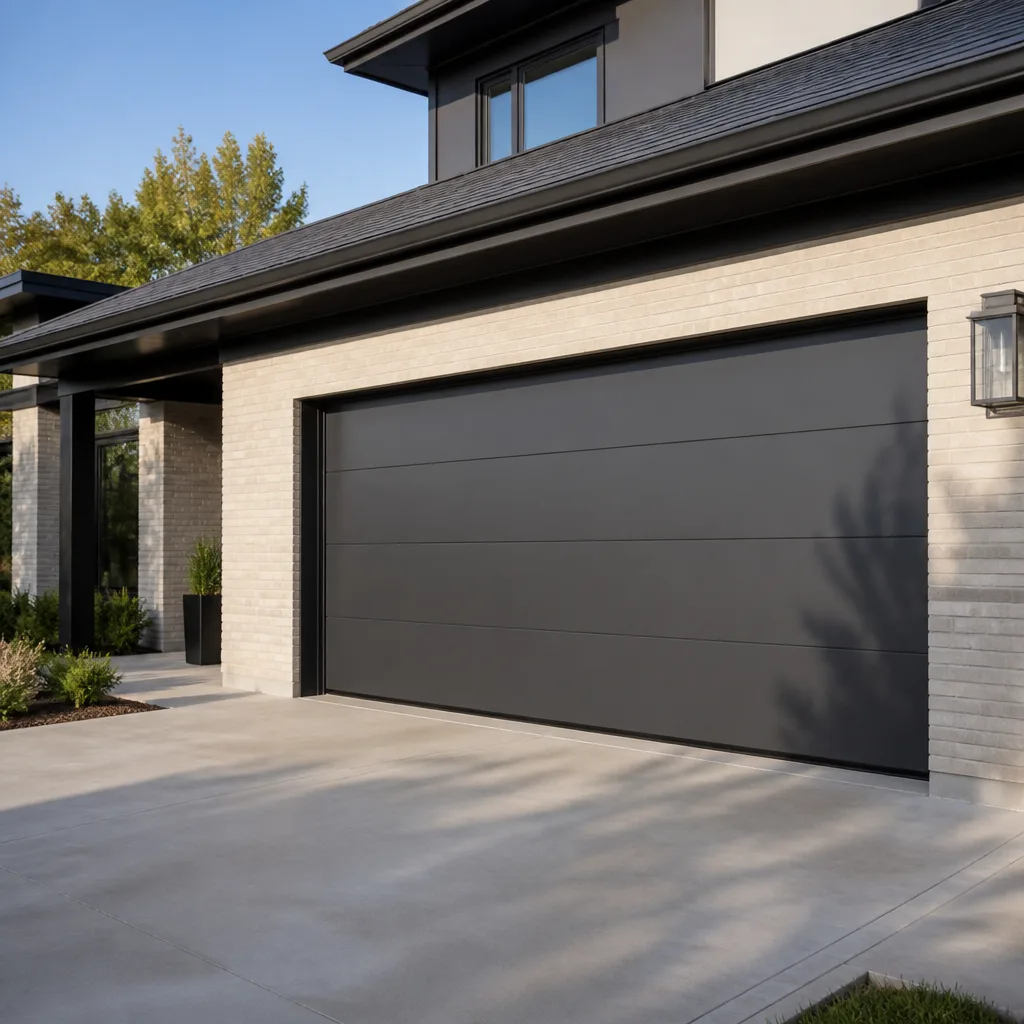 Modern flush
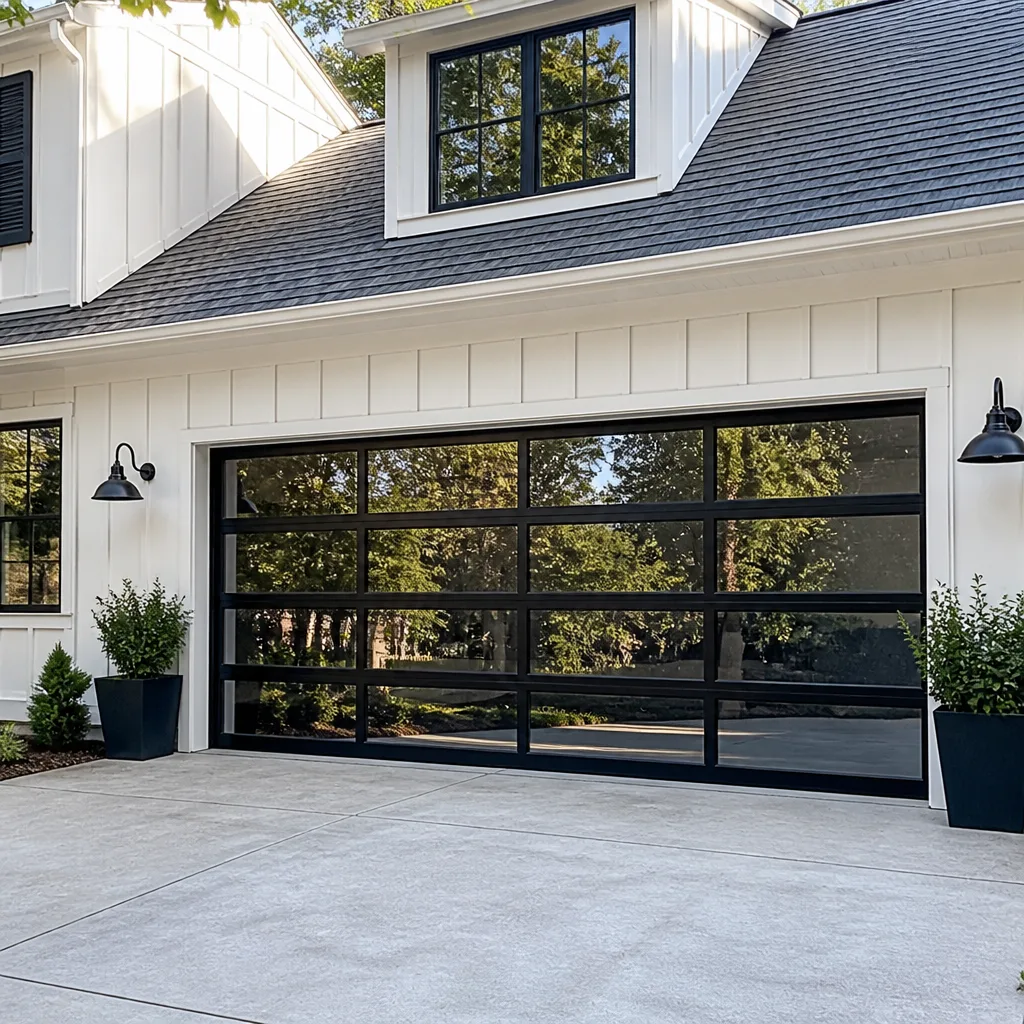 Full-view glass
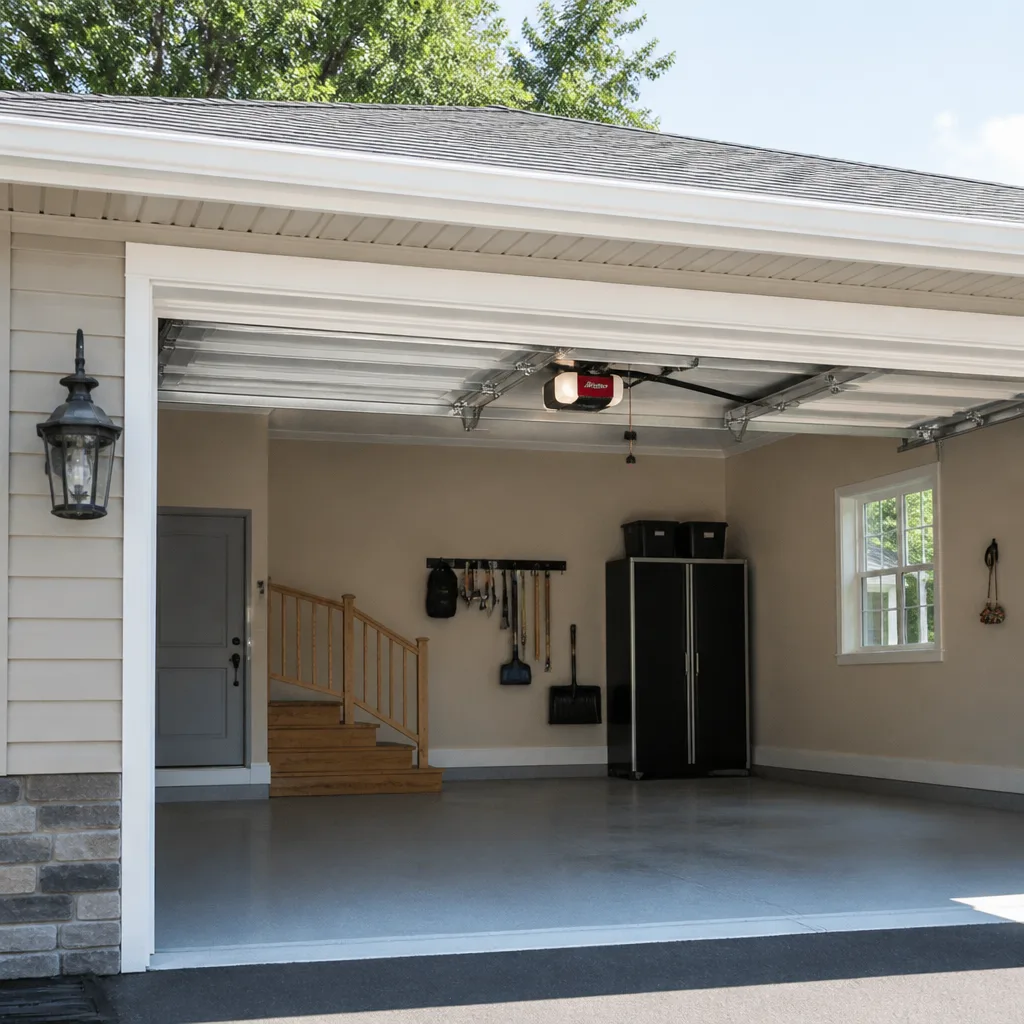 LiftMaster openers
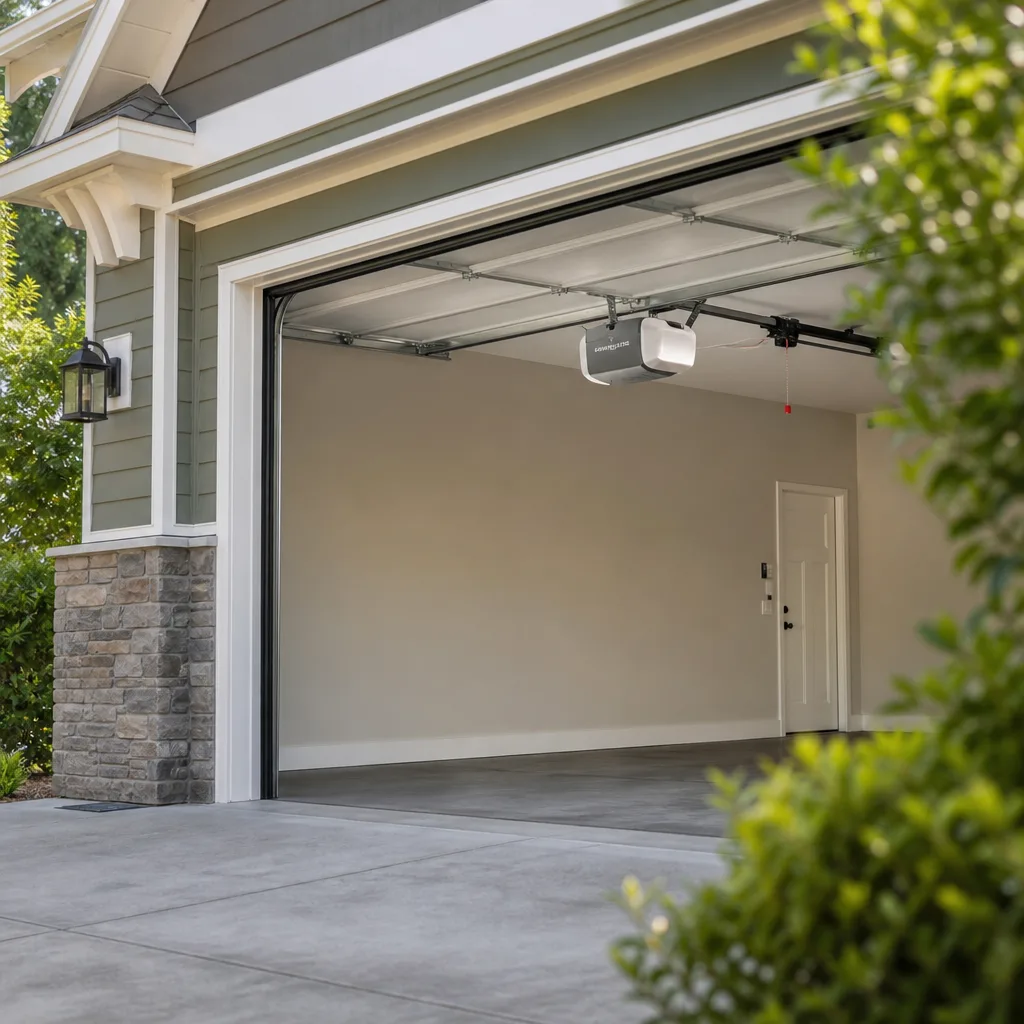 Chamberlain openers
Full 25-point door and opener safety check with every visit - springs, cables, rollers, tracks, and your LiftMaster or Chamberlain opener included
You get a price before we start. It does not change when the truck arrives.
Get your free estimateThe Complete Guide to Garage Door in Tampa
Your garage door is the largest moving part of your home and, in a Tampa hurricane zone, it’s also the wall most likely to fail first. Most homeowners learn this the hard way at 7 a.m. on a Tuesday when the door refuses to open and the car is trapped inside. This guide walks through everything that actually matters about garage doors in Tampa: the Florida-specific building codes that dictate what you can install, why our humidity kills certain springs faster than anywhere else, what “hurricane-rated” really means when the wind picks up, and what you should expect to pay when something breaks. We’ve been repairing doors across Tampa since 2002, and the things that surprise homeowners most are almost always the things generic online guides never mention.
Quick Answer
A garage door in Tampa is a system of four core components: panels, springs, cables, and an opener. In Hillsborough County, any new or replacement door must meet Florida Building Code wind-load requirements under Section 1609, which means a wind-rated door and reinforced track system. Most Tampa garage doors use torsion springs rather than extension springs because torsion springs hold up better in our humidity and provide safer, smoother operation. When something breaks, spring replacement typically runs $150 to $290 per spring, cable repair runs $125 to $225, and full door replacement starts around $1,200 for a standard single-car door.
Styles & brands we work with
Table of Contents
- How Tampa’s Climate Changes How Your Garage Door Works
- Florida Wind-Load Requirements: What’s Legal and Insurable in Tampa
- Torsion vs. Extension Springs: What Tampa Humidity Actually Does
- What “Hurricane-Rated” Actually Means on a Spec Sheet vs. When a Storm Hits
- How to Read a Garage Door Label for Hillsborough County Compliance
- The Real Lifespan of Garage Door Components in Tampa’s Salt-Air Corridor
- What Garage Door Repair and Replacement Costs in Tampa
- Garage Door Maintenance: What You Can Do and What You Shouldn’t
How Tampa’s Climate Changes How Your Garage Door Works
Nobody writes a national garage door guide with Tampa in mind, and it shows. Our climate affects every moving part on your door. Salt air from Tampa Bay and the Gulf corrodes hardware faster than in inland markets like Orlando or Lakeland. High humidity accelerates rust on springs, hinges, and roller stems. And the daily afternoon thunderstorm cycle through spring and summer means your door and its tracks go through repeated hot-wet-hot cycles that test every steel component.
What this means in practice: the galvanized steel hardware that lasts 15 years in a dry climate may show meaningful corrosion in 8 to 10 years here, especially if your home is within a few miles of the water. South Tampa neighborhoods like Palma Ceia, Bayshore Beautiful, and Davis Islands see more salt exposure than Carrollwood or New Tampa, and we can usually tell which side of town a door came from by the condition of its roller brackets. Homeowners near the bay should budget for more frequent hardware replacement and should choose doors and parts made with corrosion-resistant coatings from the start.
Humidity also affects the opener. Condensation inside the motor housing and on the safety sensor lenses is more common in Tampa than in most of the country. If you’ve ever had your door reverse for no reason or refuse to close on a muggy morning, condensation on the sensors was likely behind it. This is a nuisance, not a safety failure, but it’s worth knowing so you’re not surprised by it.
Florida Wind-Load Requirements: What’s Legal and Insurable in Tampa
Florida Building Code Section 1609 sets wind-load standards that every new garage door in Tampa must meet. In plain language, the code specifies how much wind pressure a door and its track system must withstand without structural failure, based on the home’s location and exposure. Tampa sits in a high-velocity hurricane zone (HVHZ) on the coast and a wind-borne debris region inland, which means the door is tested not just for wind, but for impact from flying objects during a storm.
For a Tampa homeowner, the practical points are simple. Any new or replacement residential garage door must be labeled as wind-rated for your home’s specific design pressure. The door, the track, the brackets, and the attachment to the jambs all count together as one assembly. A strong door on weak tracks fails just like a weak door. And if your home was built before 2002, when Florida’s statewide code took effect, there’s a decent chance the original door does not meet current wind-load requirements at all. That matters when it’s time to renew your homeowners insurance: many carriers now ask for documentation that the garage door is wind-rated, and a door without a legible label can hold up a policy or raise a premium. See our guide to Garage Door Permits, Codes & Inspections in FL: What You Need to Know for details on compliance documentation.
Replacing a pre-2002 door with a modern wind-rated model is one of the highest-value upgrades a Tampa homeowner can make for insurance and storm readiness. It isn’t the cheapest project, but it’s one of the few that pays back in both safety and paperwork.
Torsion vs. Extension Springs: What Tampa Humidity Actually Does
A torsion spring is the horizontal coil mounted on a steel shaft directly above the door opening. It stores mechanical energy by twisting, not stretching, and it does most of the lifting when your door goes up. An extension spring stretches along the horizontal track on either side of the door and expands and contracts with each cycle. Both do the same job, but they fail differently, cost differently, and age differently in Tampa’s climate.
Torsion springs are the dominant choice in modern Tampa homes for three reasons. First, they last longer: a standard torsion spring is rated for about 10,000 cycles, which translates to roughly 7 to 10 years of daily use, while extension springs are typically rated for 5,000 to 7,000 cycles and more often need replacement in the 5 to 7 year range. Second, torsion springs fail more safely. When an extension spring snaps, it can send broken steel across the garage at high speed. Torsion springs remain contained on the shaft. Third, torsion springs provide smoother, more balanced operation, which is why builders in Hillsborough and Pinellas counties have specified them on new construction for over two decades.
Tampa’s humidity doesn’t make one spring type fundamentally different, but it does accelerate rust on both. A corroded spring weakens before its rated cycle count. If you see orange or brown pitting on the coils, the spring is aging faster than its cycle rating suggests. This is a case where visual inspection beats the spec sheet. We’ve replaced torsion springs in Westchase that failed at year six because the garage sits adjacent to a retention pond and holds moisture constantly. The environment, not the cycle count, was the deciding factor.
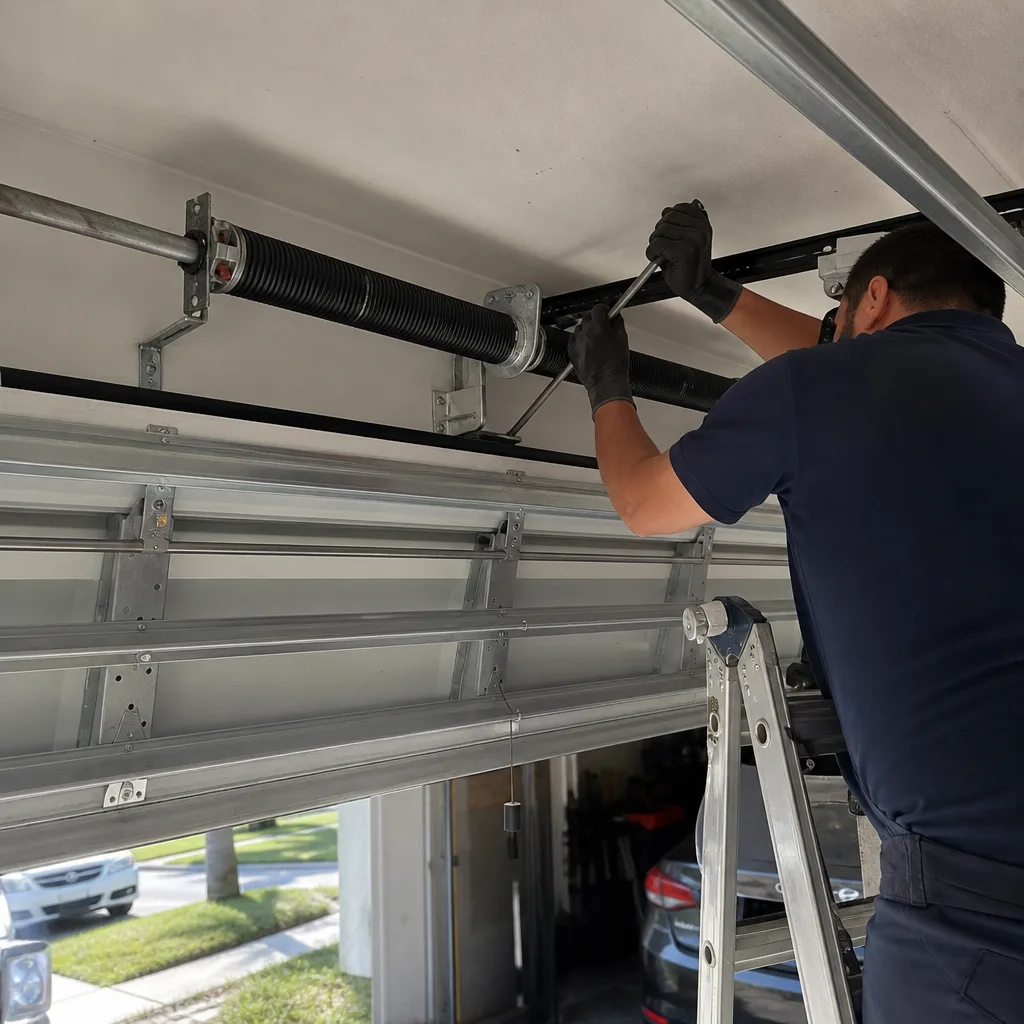
Safety note: garage door springs are under extreme tension at all times, even when the door is closed. Attempting to remove or adjust a spring without proper winding bars and experience can cause serious injury. If a spring breaks, call a professional rather than trying to work around it. This is not a DIY job.
What “Hurricane-Rated” Actually Means on a Spec Sheet vs. When a Storm Hits
On a spec sheet, “hurricane-rated” or “wind-rated” means the door was tested and certified to withstand a specific wind pressure, expressed in pounds per square foot (psf) or miles per hour, at a specific building height and exposure category. The door has a label or a certificate stating the design pressure rating, the product approval number, and the testing standard. In Florida, look for a Florida Product Approval number, often formatted as “FL” followed by a series of digits. That number ties the door to specific testing documentation you can look up.
When a storm actually hits Tampa, the rating means two separate things. First, the door panel itself resists the wind pressure without deflecting enough to pull out of the tracks. Second, and honestly the more likely failure point, the track and bracket system holds the door in place while the garage interior experiences pressure changes. The door isn’t just a door during a hurricane: it’s a structural wall. When a garage door fails in high wind, the pressure entering the garage can lift the roof off the house. That’s why Florida code treats it as part of the building envelope, not just an appliance.
How to verify your door’s rating without trusting a faded sticker: look for the manufacturer’s label on the inside face of a door panel, typically on the top or side edge. The label will list the model, the design pressure, and the product approval number. If the label is missing or illegible, you can often find the approval document by searching the Florida DBPR product approval database using the door brand and approximate model year. If you’re not sure, a local garage door company can identify the door and tell you whether it’s compliant. Don’t guess on this one. Insurance companies do not accept guesses.
How to Read a Garage Door Label for Hillsborough County Compliance
Before you buy or replace a garage door in Tampa, you want to confirm the door meets Hillsborough County requirements. The label tells you most of what you need, and it takes about sixty seconds to decode once you know what you’re looking for. Let’s walk through it step by step.
- Find the label. It’s usually a sticker or metal plate on the inside face of the top door panel or on the inside edge of the door frame. On some models, it’s located near the bottom of the door on the interior side.
- Look for the design pressure rating. It’ll appear as a number followed by “psf” (pounds per square foot) or a miles-per-hour figure. Higher numbers mean a stronger door. A standard single-car door in an inland Tampa neighborhood may carry a rating around +25/-25 psf, while a door near the bay or in a high-exposure zone may need +35/-35 or higher. The required number depends on your exact address and home height.
- Find the Florida Product Approval number. This is the “FL” number. It’s the single most important line on the label for compliance purposes. It ties the door to specific test results on file with the state.
- Check the manufacturer and model. You’ll see the brand name (Clopay, Amarr, Wayne Dalton, etc.) and a model number. Keep this for insurance documentation.
- Confirm the installation instructions reference Florida code. The label or the accompanying documentation will state that installation must comply with Florida Building Code Section 1609 and follow the manufacturer’s wind-load installation instructions.
If the label is missing, damaged, or painted over, treat the door as non-compliant until proven otherwise. A door without a verifiable approval number is a door that will cause problems during an insurance review, even if it was fine for the previous owner. When we replace doors across Tampa, we photograph the labels and provide the approval documentation to the homeowner to keep with their insurance paperwork.
The Real Lifespan of Garage Door Components in Tampa’s Salt-Air Corridor
National guides quote component lifespans based on average American conditions, and those numbers overstate how long things last in Tampa. Here’s what we actually see across thousands of service calls in Hillsborough County.
- Torsion springs: Nationally quoted at 10 to 15 years. In Tampa, expect 7 to 10 years with daily use, and 5 to 7 years if the garage is near salt water or holds humidity. Rust corrosion is the usual culprit.
- Extension springs: Nationally quoted at 7 to 10 years. In Tampa, plan on 5 to 7 years.
- Steel cables: Nationally quoted at 7 to 12 years. In Tampa, 5 to 8 years is realistic, and shorter along the bay. Cables fray before they fail, so annual visual checks will catch most problems early.
- Rollers: Nylon rollers typically last 7 to 10 years nationally but 5 to 8 years in Tampa. Steel rollers with unsealed bearings rust faster and can get noisy in as little as 3 to 4 years.
- Hinges and brackets: These are consumables in a coastal climate. We replace rusted hinges and brackets every day in South Tampa. Expect to replace some hardware between years 8 and 12, sooner near salt water.
- Openers: The motor itself usually lasts 10 to 12 years, regardless of climate. But opener safety sensors, belts, and circuit boards fail faster in humidity. Belt-drive openers from Marlow Garage Door Repair Tampa‘s service area homes consistently outlast chain-drive models because they have fewer corrosion-prone metal components.
The takeaway: Tampa isn’t “average America,” and neither is the lifespan of your garage door parts. If you’re buying a home built in 2010 with the original door hardware, assume you’re within a few years of the first major replacement cycle. Budget accordingly.
What Garage Door Repair and Replacement Costs in Tampa
Let’s talk real numbers, because nobody benefits from a vague “call for pricing” answer. The pricing below reflects what we see across Tampa for standard residential doors.
- Spring replacement (one spring): $150 to $290, depending on spring size and cycle rating. Most homes need two springs replaced at once, so the realistic total is $280 to $520.
- Cable repair or replacement: $125 to $225 per side, including service call.
- Roller replacement (full set): $95 to $180, nylon rollers included.
- Track adjustment or alignment: $85 to $175.
- Opener replacement (motor unit only): $350 to $650 installed, depending on brand and drive type.
- Sensor repair or replacement: $75 to $150.
- Full door replacement (single-car, wind-rated): $1,200 to $2,500 installed, depending on insulation, window options, and design pressure rating.
- Full door replacement (double-car, wind-rated): $1,800 to $4,000 installed.
These are the numbers to have in your head before you call anyone. When a spring breaks in West Tampa and someone quotes you $800, you’ll know it’s high. When someone quotes $90 for a complete spring replacement, you’ll know to ask what’s missing. A reputable company quotes a price that matches the scope of work and sticks to it. At Marlow’s Tampa spring repair service, the written price is delivered before any work begins, and it’s the same number on the invoice. If you’re getting garage door service in Tampa, ask every company you call the same question: “Will I see the price in writing before you start?” The answer tells you everything you need to know.
Garage Door Maintenance: What You Can Do and What You Shouldn’t
A garage door is like a car: it works better and lasts longer with routine upkeep, but some maintenance tasks are too dangerous for a homeowner without training. Read our DIY vs Professional Garage Door: The Tampa Homeowner’s Decision Guide for the honest split on what you can handle yourself.
What you can do safely every 3 to 4 months:
- Inspect the cables visually. Run your eyes along both cables from drum to bottom bracket. Look for fraying, rust, or a loose strand. If you see damage, stop using the door and call a pro. Do not touch the cables: they carry the same tension as the springs.
- Lubricate moving parts. Use a garage door spray lubricant (not WD-40, which is a degreaser) on the roller stems, hinges, and the torsion spring coils. Do this every 3 months in Tampa’s humidity, and your door will run noticeably quieter.
- Test the safety reversal. Place a roll of paper towels on the ground under the door and close it. The door should reverse when it contacts the object. If it doesn’t, call for service immediately: this is a safety system, not a convenience feature.
- Check the balance. Pull the emergency release cord with the door closed, then manually lift the door to waist height. It should stay in place. If it falls or climbs, the springs are out of balance and need attention.
What you should never attempt yourself: winding or unwinding torsion springs, replacing cables, removing a panel without securing the door, or any repair that requires working under a raised door. Torsion springs store enormous energy, and a mishandled spring can cause life-altering injury. In our 20-plus years in Tampa, we’ve never once wished a homeowner had tried to fix a spring themselves. Not once.
Common Mistakes to Avoid
- Ignoring a slow or jerky door. A door that hesitates on the way up is usually telling you something. In Tampa, where humidity rounds out roller bearings and corrodes brackets early, small problems become big ones fast. Address the issue when you notice it, not when the door stops moving entirely.
- Replacing one spring instead of both. If one torsion spring has failed, the other is at the end of its life too. Replacing only the broken one means paying for a second service call within a year. Replace both. The labor cost is nearly identical either way.
- Painting over the compliance label. When you paint or refinish the door, tape off the label or remove and reattach it afterward. A painted-over label is the same as no label for insurance purposes. We see this constantly in Tampa, and it creates avoidable problems during home sales and insurance reviews.
- Buying a door based on price alone. The cheapest wind-rated door meets minimum code, but it may be louder, less insulated, and more corrosion-prone than a mid-range model. In South Tampa’s salt air, a few hundred dollars more for corrosion-resistant hardware pays for itself over the door’s life.
- Skipping the wind-load review on an older home. If your home predates the 2002 Florida Building Code, your original door may not meet current wind requirements. Insurers care. A door that fails during a storm costs far more than a proactive replacement.
- Lubricating with WD-40. WD-40 is a solvent, not a lubricant. It will strip away whatever lubrication is left and leave the parts noisier than before. Use a purpose-made garage door lubricant.
- Assuming “hurricane impact” and “wind-rated” mean the same thing. They don’t. Hurricane impact-rated doors are tested for debris impact; wind-rated doors are tested for pressure. A door can be wind-rated without being impact-rated, which is fine for many inland Tampa homes but not necessarily for houses in wind-borne debris regions. Know which one your address requires.
See the difference
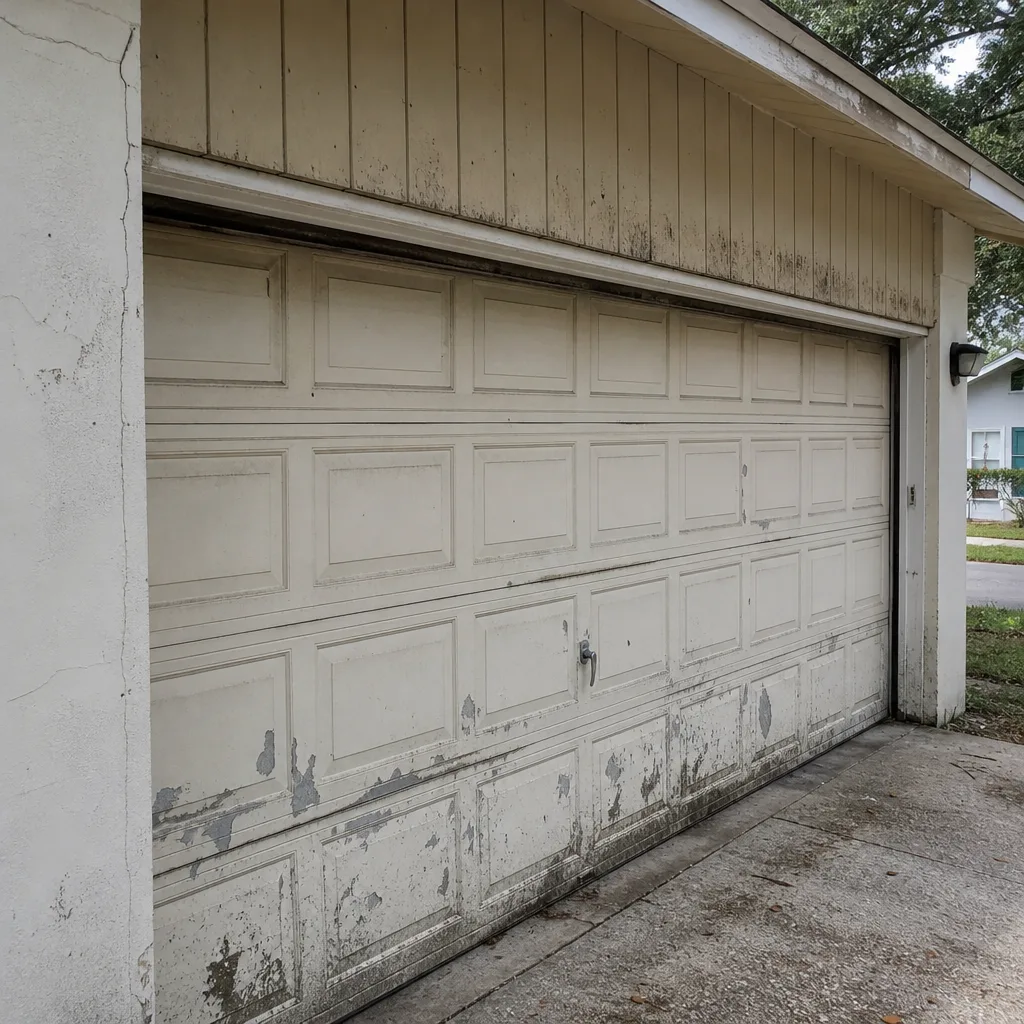 Before
 After
After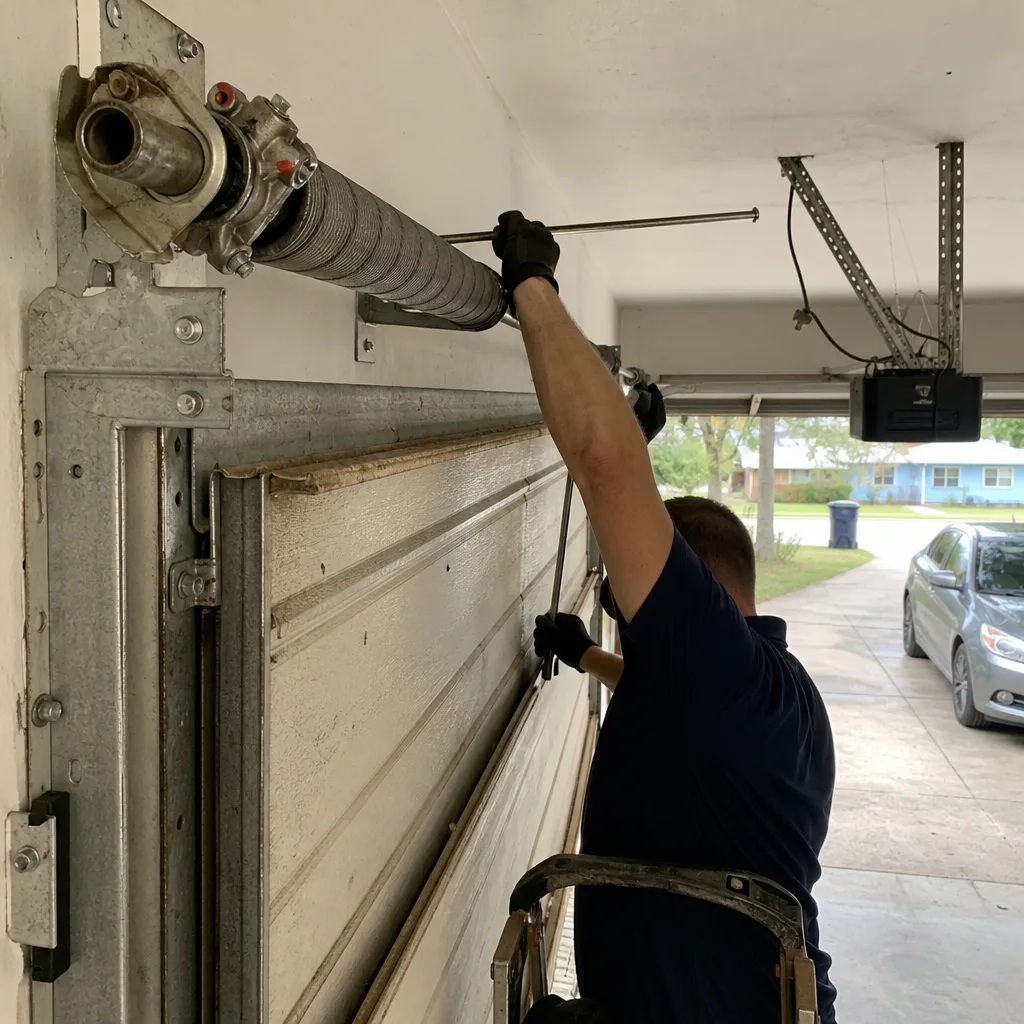 Before
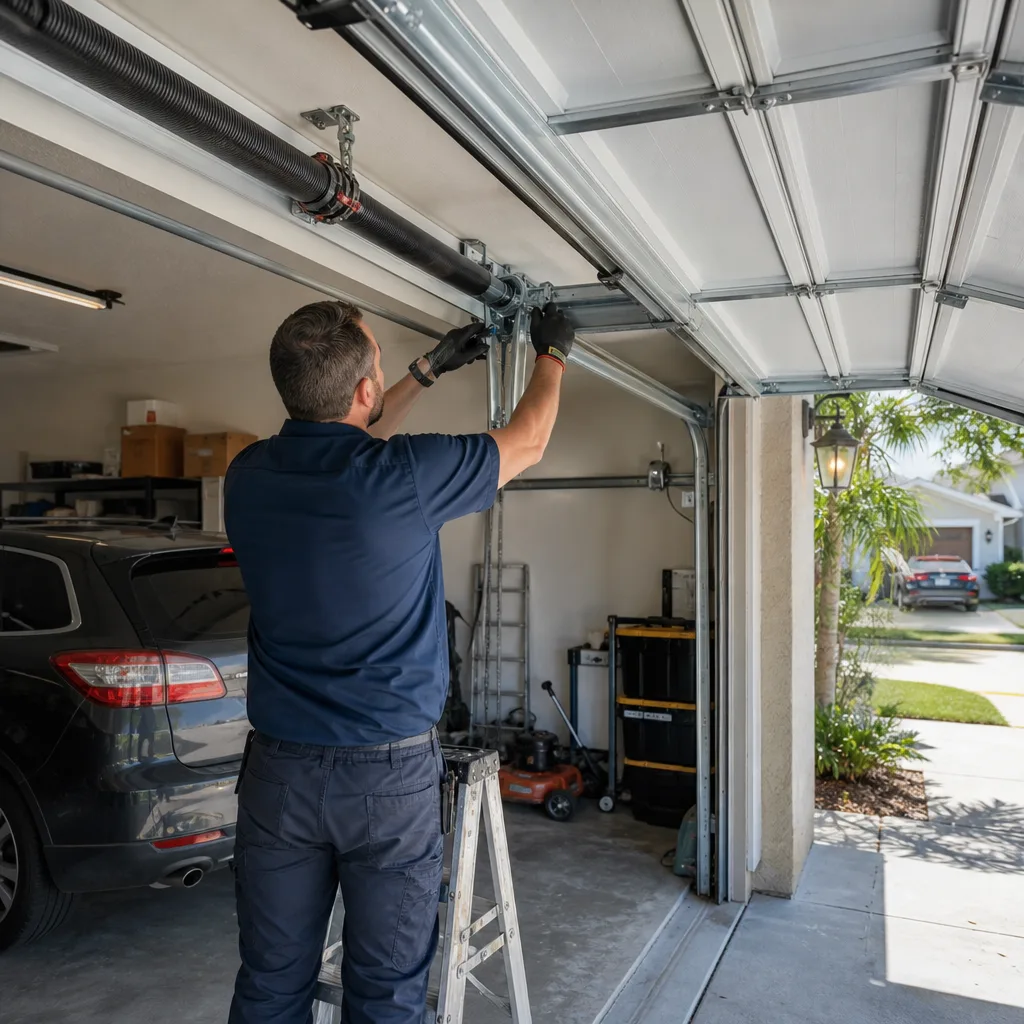 After
After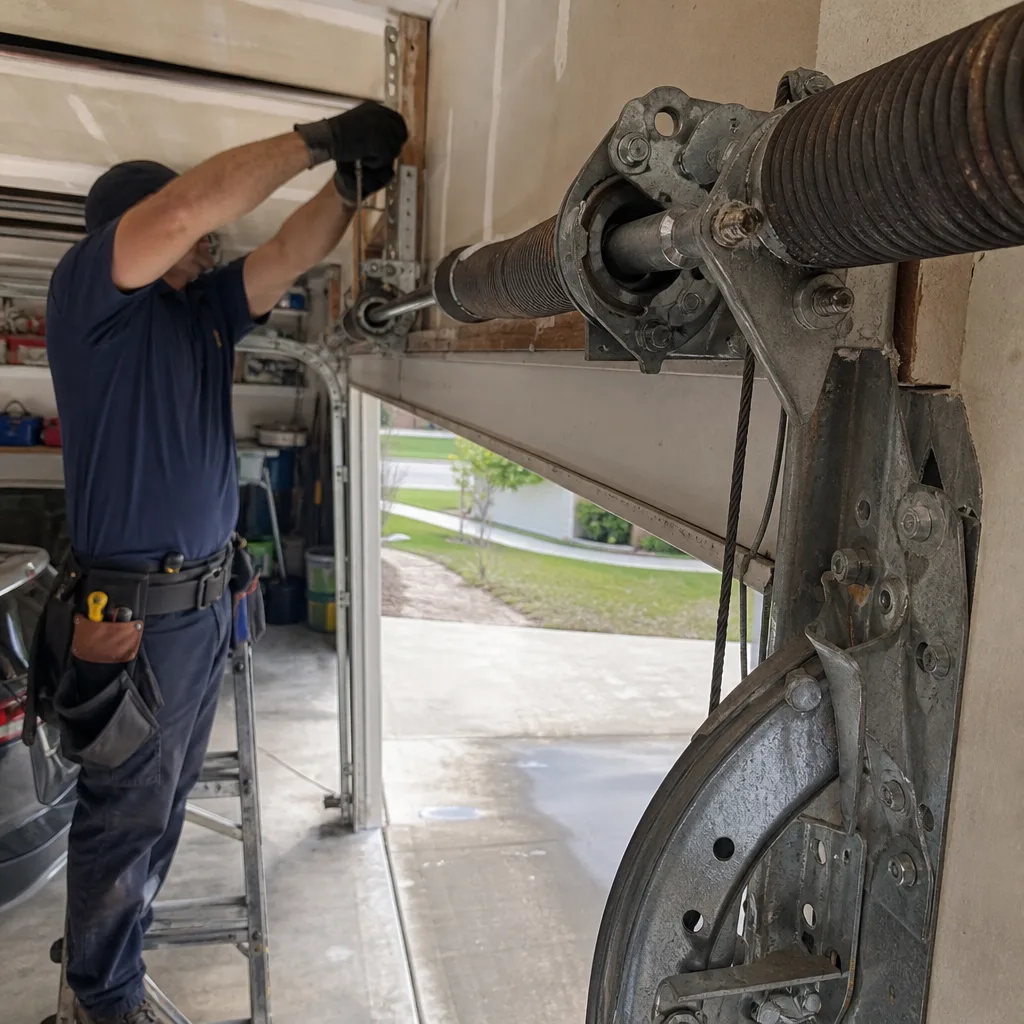 Before
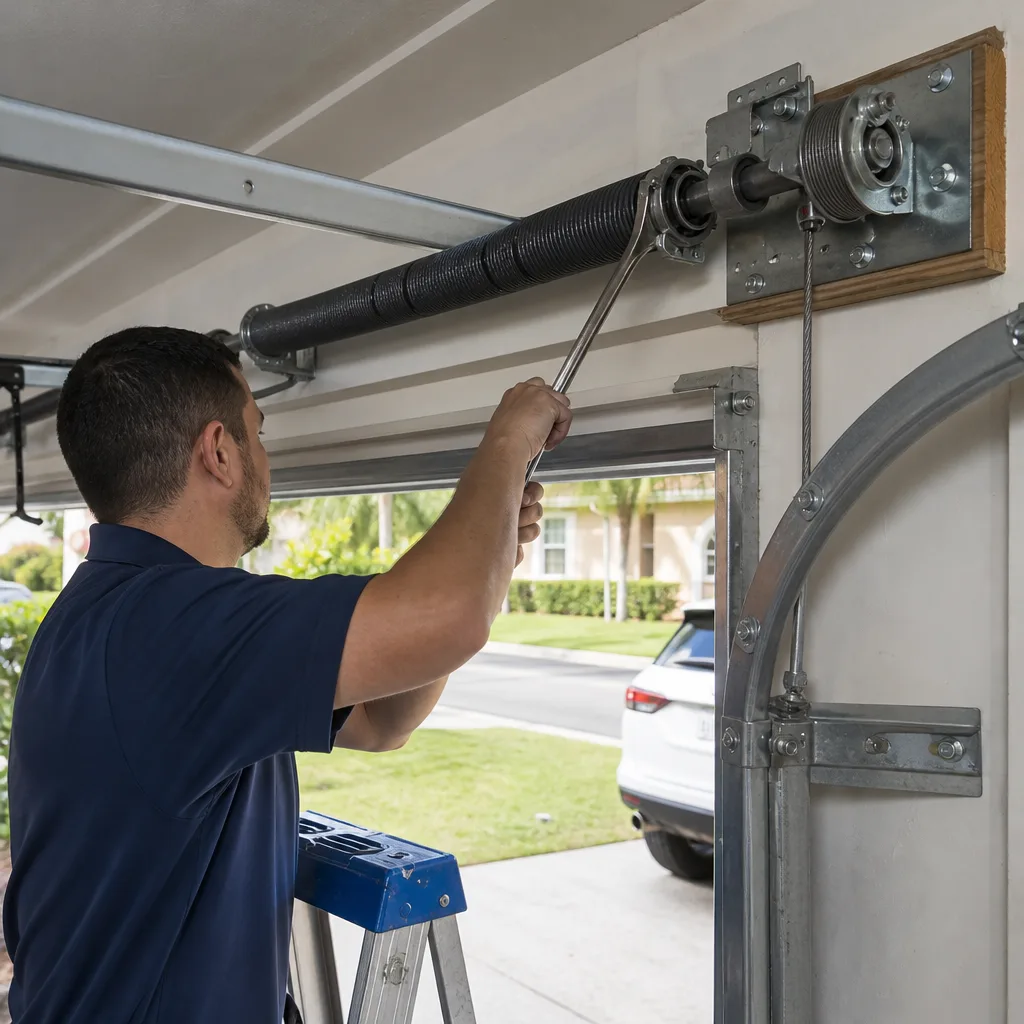 After
AfterWhen to Call a Professional
Call a professional when a spring breaks (you’ll hear it, loud and sudden), when cables fray, when the door is off balance, when it reverses unexpectedly, or when the opener motor runs but the door doesn’t move. These are not situations where you wait to see what happens. A broken spring or cable takes the door out of service and can cause the door to fall if you try to operate it manually. Safety sensors that stop working are a safety issue for pets and children. And any repair involving springs or cables is a job for a trained technician with proper tools. Marlow Garage Door Repair offers garage door repair in Tampa with free estimates: call (850) 761-0207 and we’ll give you a written price before any wrench turns.
Frequently Asked Questions
Spring replacement in Tampa typically costs $150 to $290 per spring, with most homes requiring two springs for a total of $280 to $520 including labor. The exact price depends on spring size, cycle rating, and whether your door uses torsion or extension springs. Call (850) 761-0207 for a free written estimate before any work begins.
Yes. Any new or replacement garage door in Tampa must meet Florida Building Code wind-load requirements under Section 1609, and homes in wind-borne debris regions need impact-rated doors. The specific rating for your home depends on your property’s location and exposure category. If your home predates 2002, the original door may not be compliant with current code at all.
Torsion springs last 7 to 10 years on average in Tampa, and extension springs last 5 to 7 years. Humidity and salt air from Tampa Bay accelerate rust and shorten spring life compared to national averages. Homes near the water, especially in South Tampa neighborhoods, should expect the shorter end of those ranges.
You can, but you shouldn’t. Torsion springs are under hundreds of pounds of tension even when the door is closed, and a spring released improperly can cause severe injury. This is one of the few home repairs where the risk is simply not worth the money saved. Cable repair carries the same risk, since cables share the spring’s tension.
A wind-rated door has been tested to withstand a specific wind pressure without structural failure. An impact-rated door has been tested to withstand debris impact as well, such as a 2×4 launched at the door during a storm. Both doors carry Florida Product Approval numbers, but only impact-rated doors qualify for wind-borne debris regions, which include parts of Tampa and Hillsborough County. Check your home’s specific requirements before buying.
We’re certified to service LiftMaster, Chamberlain, Genie, Clopay, Amarr, Wayne Dalton, Craftsman, and Raynor garage doors and openers. That eight-brand training means the technician who arrives at your Tampa home already knows how your specific door is assembled, which parts it uses, and what typically fails first. For more guides & resources, explore our blog, or call (850) 761-0207 for a free estimate on any brand.
The Bottom Line
Your garage door in Tampa is more than a convenience: it’s a structural wall in a hurricane zone, a moving assembly that fights humidity and salt air every day, and a system with predictable lifespans and failure points. Know your door’s wind-load rating and keep the compliance label legible. Plan for spring replacement around year 7 to 10, sooner near the water. Never attempt spring or cable work yourself. When something does fail, get a written price before work starts and insist on it. That’s how Marlow Garage Door Repair Tampa has operated since 2002, and it’s how every Tampa homeowner should expect to be treated.
Written by Jaylen Ross, Owner at Marlow Garage Door Repair Tampa, serving Tampa since 2002.